18 Feb, 2026
Emerging Technologies Transforming Industrial Automation

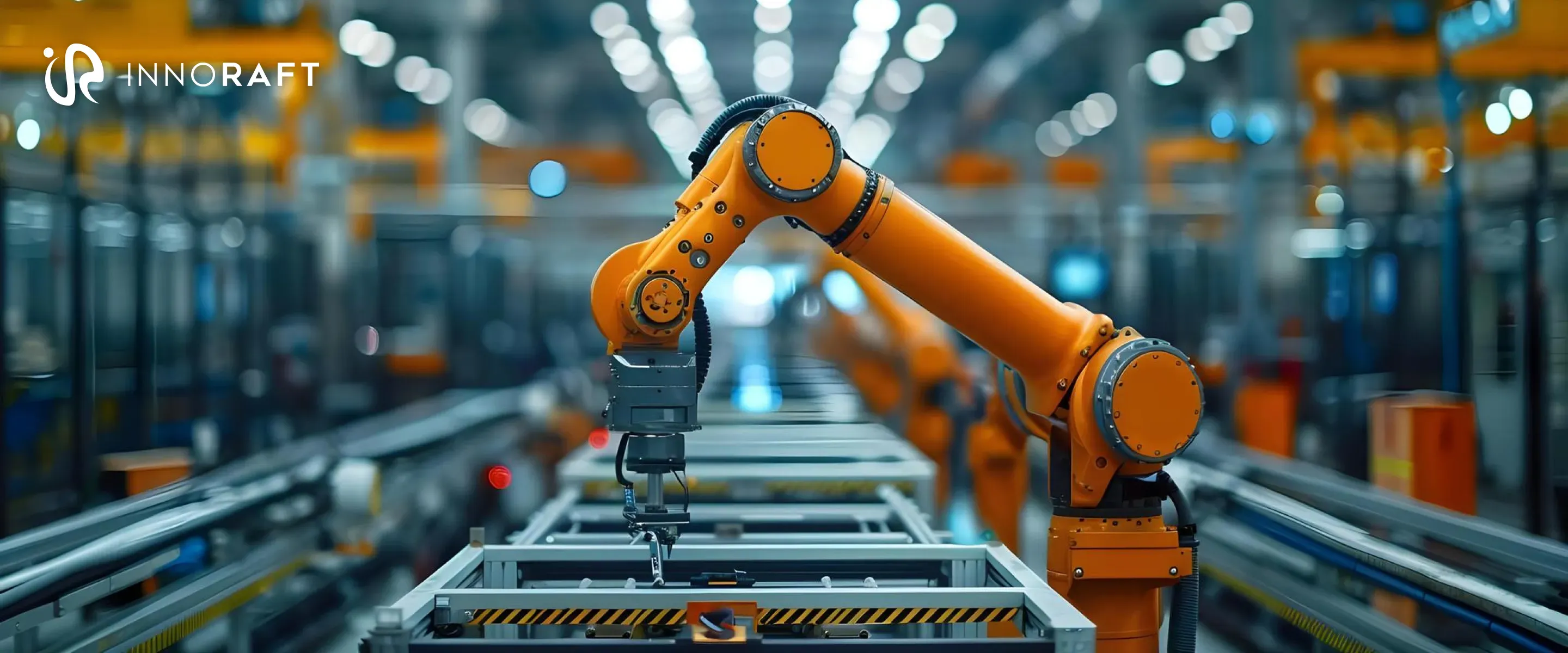
Industrial automation has changed drastically over the last decade. But a lot of this "transformation" has just been about improving visibility through dashboards, SCADA upgrades, and data collection. Organizations have built faster ways to collect and look at data, but the fundamental decision-making loops have not changed all that much.
That is finally shifting. We are finally moving past the era of connectedness and into the era of autonomous. The future of automation isn't just about sensors sending data to screens; it's about systems that can think, act, and adapt on the fly.
Let's take a look at the emerging technologies in industrial automation that are driving this shift.
Agentic AI
There is a distinct difference between the AI we’ve used for years and what’s coming next. Standard AI is great at classifying data (telling you "this is a cat" or "this part is defective"). Generative AI is great at creating content. But Agentic AI? It takes action.
The Role of AI in smart factories has evolved from being passive to being more autonomous agents. They don't just flash a warning light when a shipment is delayed; they perceive the delay, reason through the alternatives, and autonomously suggest alternate re-routing options the supply chain to minimize impact. We are already seeing this in adaptive control systems that adjust machine parameters automatically within the pre-defined limits to maintain process stability. It pushes us from automatic workflows, which follow a rigid script, to autonomous ones that pursue a goal.
Edge AI
For a long time, the standard playbook was "send everything to the cloud." But when you are running a high-speed assembly line, the time it takes data to travel to a server and back is simply too long.
Edge AI solves this by running algorithms right on the device- the robot arm, the camera, the smart sensors in industrial systems. It processes data locally. This is critical for visual inspection systems that need to spot a scratch on a product moving at high speeds, or vibration sensors that detect any issues early enough for a safe shut down. As factories start generating terabytes of data daily, we can't afford the bandwidth or the latency of the cloud for every single decision.
Industrial DataOps
This is the unglamorous plumbing of Industry 4.0, but it is the reason most AI projects succeed or fail. Industrial environments are messy. You have fifty different machines from five different decades speaking different data languages.
DataOps refines the process of managing data- collecting, contextualizing, validating, and delivering industrial data so that analytics, AI and predictive maintenance technologies can operate reliably. It contextualizes raw operational technology (OT) data so it actually makes sense to IT systems. Without this layer, you just have "garbage in, garbage out." With it, you can normalize data across an entire plant, allowing a single system to calculate real-time efficiency (OEE) regardless of whether the data came from a brand-new robotic arm or a legacy stamping press.
New Age Collaborative Robots (Cobots )
Traditional industrial robots are powerful, but they are also dangerous, they need cages. As one of the emerging technologies in industrial automation, Cobots changed that. They are designed with force-feedback sensors, speed monitoring, and safety control systems to limit force and stop the machine instantly if it touches a person.
We are seeing them everywhere now, from machine tending (loading CNC machines) to palletizing boxes. The newer generation of cobots used for automation in Industry 4.0 are finding a middle ground: safe enough to be uncaged, but fast and strong enough to handle serious industrial payloads. It’s democratizing automation for small and medium businesses that don't have the floor space for massive safety cages.
Industrial Internet of Things (IIoT) & Industry 4.0
At its core, IIoT is the network of connected instruments that makes Automation in Industry 4.0 possible. It’s the nervous system of the factory.
Right now, one of the biggest benefits of IoT in industrial automation is remote monitoring; knowing a pump is vibrating strangely three days before it actually breaks. But as we look toward "Industry 5.0," the focus is shifting from simple connectivity to sustainability and human-centricity. We aren't just connecting machines to extract data anymore; we are connecting them to optimize energy usage and reduce waste in real-time.
Edge Computing & Cloud Integration
It’s rarely an "either/or" choice between Edge and Cloud computing in manufacturing. The most effective architectures use both in a hybrid model.
You use Edge computing for immediate control- speed, safety, and local processing. You use the Cloud for heavy lifting, long-term storage and training massive AI models. This creates a loop called "fleet learning." This improved and validated model can be deployed across the fleet, helping other robots to benefit from the learned improvement.
Building Information Modeling (BIM) & Digital Twin in Mufacturing
A digital twin in manufacturing is a living virtual replica of a physical asset. When you combine that with BIM (the 3D modeling of the building itself), you get a complete virtual factory.
This allows for virtual commissioning. You can build and run a production line in software to find bottlenecks and bugs before you ever buy a piece of hardware. It drastically de-risks capital projects. Eventually, we are looking at an "Industrial Metaverse" where factories are built, tested, and optimized entirely in a virtual world before a single brick is laid.
Bridging the Skill Gap (AR, VR)
The manufacturing workforce is aging, and a lot of specialized knowledge is retiring with them. Augmented Reality (AR) and Virtual Reality (VR) are two of the most important emerging technologies in industrial automation that help capture that expertise and transfer it to the next generation.
Imagine a junior technician wearing AR glasses that overlay digital arrows on the real world, showing them exactly which bolt to turn. Or using VR to train workers on safety protocols in hazardous environments without ever putting them in danger. It turns every operator into an expert and allows a senior engineer to provide "over-the-shoulder" support from thousands of miles away.
Autonomous Mobile Robots (AMRs)
Old-school AGVs (Automated Guided Vehicles) were reliable, but limited to fixed paths; they followed magnetic tape on the floor. If you stood in front of one, it stopped and waited.
AMRs used for automation in Industry 4.0 are different. They use LiDAR and cameras to navigate freely, much like a self-driving car. If there is a pallet in the way, they go around it. This flexibility is the backbone of modern logistics. As customization increases and production lines change more frequently, you can't rely on fixed conveyor belts. AMRs provide the necessary fluidity to move raw materials and finished goods through a dynamic factory floor.
No-Code/Low-Code Automation
For years, process improvement died in the IT backlog. Engineers needing a simple dashboard or a digitized form often faced six-month lead times just to get a ticket approved. As one of the emerging technologies in industrial automation, low-code platforms broke that dependency. Now, the person on the floor, the one who actually understands the workflow, can drag and drop a solution into existence. It might be as simple as killing off a paper checklist or triggering an automatic maintenance alert, but the key is that operations teams own the build, not IT. It is important to note, however, that even though low-code platforms speed up development, proper governance to ensure cybersecurity in industrial automation to maintain reliability.
Cloud Robotics
Cloud robotics shifts any non-real time processing, like fleet coordination or learning and analytics, to cloud, while keeping real-time motion control on the robot itself. You don't need a supercomputer strapped to every AGV. By centralizing navigation and object recognition, the hardware on the floor gets lighter, cheaper, and more power-efficient. It’s also the only way to scale fleet management effectively. You coordinate traffic centrally to stop collisions and push updates instantly. If one unit learns a better path, the entire fleet gets that upgrade in real-time without manual patching.
Conclusion
Automation used to mean replacing muscle with motors. Now, for automation in industry 4.0, we are replacing rigid scripts with actual intelligence. Whether it is Agentic AI rerouting a supply chain or Physical AI grasping a wet object, the shift is about adaptability. We are building systems that don't just execute commands, they learn from them.
Want to know more about industrial automation? Connect with our experts.
FAQ
Frequently Asked Questions
Didn’t find what you were looking for here?