10 Dec, 2025
How Agile and DevOps Drive Digital Evolution

Businesses today don't fail because they lack ideas. Businesses today fail because they either cannot identify the really valuable ideas or cannot execute those ideas fast enough to remain relevant.
Your business needs to remain relevant in the fast-changing marketplace, and in order to do so, it requires a strong digital evolution framework that supports rapid yet sustainable evolution that helps your business scale with the market. However, to achieve significant success, your business's digital evolution needs to move away from mere technology adoption and signify a fundamental shift in your operating models. It is the transition from static, project-based work to continuous, product-centric value delivery. It is the process of shedding rigid, legacy structures in favor of systems that breathe, adapt, and grow.
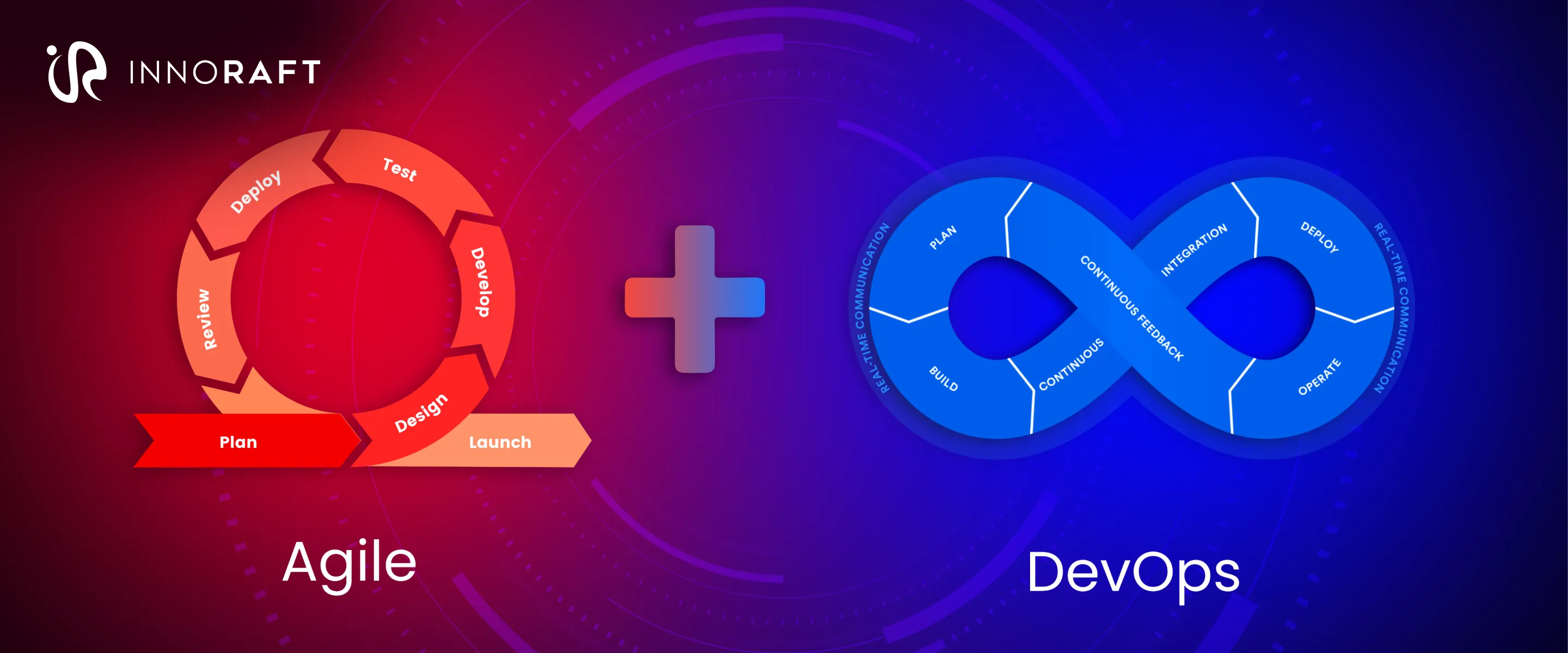
To achieve this kind of growth, you need a methodology that supports rapid change and a delivery mechanism that ensures stability. You need Agile and DevOps. While often discussed separately, these two frameworks are the dual engines of sustainable digital growth, and their true power emerges through Agile DevOps integration. Agile provides the philosophy for iterative value, while DevOps provides the automated highway to deliver that value.
This guide explores how Agile and DevOps work together to drive successful digital evolution, detailing the mechanisms that allow you to transform from a slow-moving organization to a digital disruptor.
Defining The Pillars: Agile and DevOps Fundamentals
Before going in-depth about the relation between these two methodologies, let's clear up the fundamentals of these methodologies and how they support Agile methodologies for business agility.
What Is Agile?
Agile is a project management and software development philosophy that prioritizes speed, flexibility, and customer collaboration over rigid planning and heavy documentation.
At its core, Agile acknowledges that you cannot know everything at the start of a project. Instead of spending six months building a "perfect" product in isolation based on guesses, Agile teams work in short cycles known as sprints. These sprints usually last one to two weeks and result in potentially shippable increments of software, creating the foundation for continuous delivery in digital evolution.
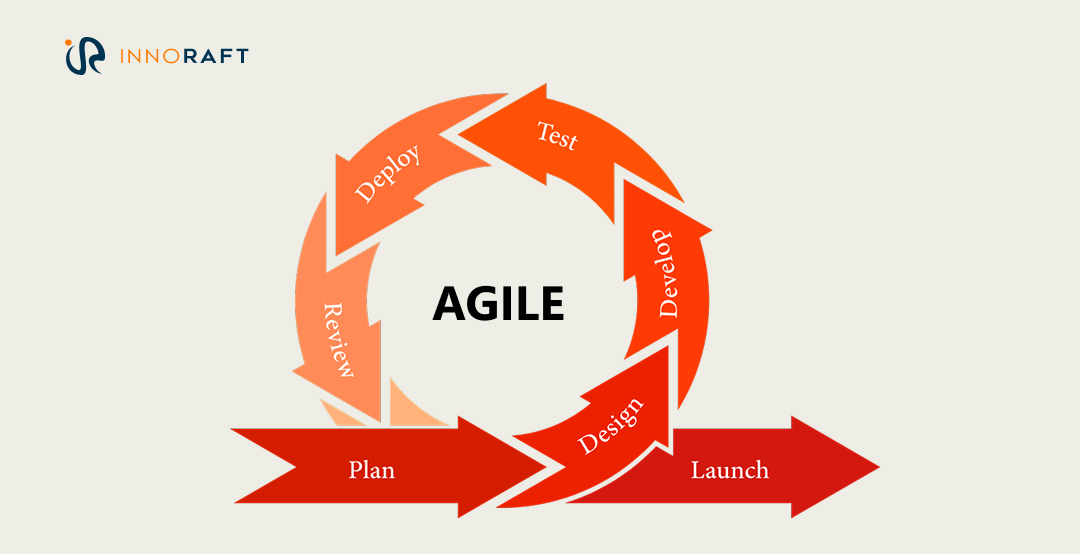
The primary goal of Agile project management experts is to create a tight feedback loop. By releasing small updates frequently, teams can gather user feedback immediately. This allows them to adjust requirements based on real-world data rather than assumptions. In the context of Digital Evolution, Agile ensures that you are building the right thing at the right time. It prevents the accumulation of "waste", i.e., features that cost money to build but provide zero value to the customer.
What is DevOps?
DevOps is a set of practices, tools, and cultural philosophies that automates and integrates the processes between software development and IT teams, enabling DevOps automation best practices to operate as a seamless part of everyday workflows.
Traditionally, developers wrote code and then "threw it over the wall" to the operations team to deploy and manage. This created a silo where developers prioritized change (new features) while operations prioritized stability (uptime). The result was often conflict, delayed releases, and buggy software.
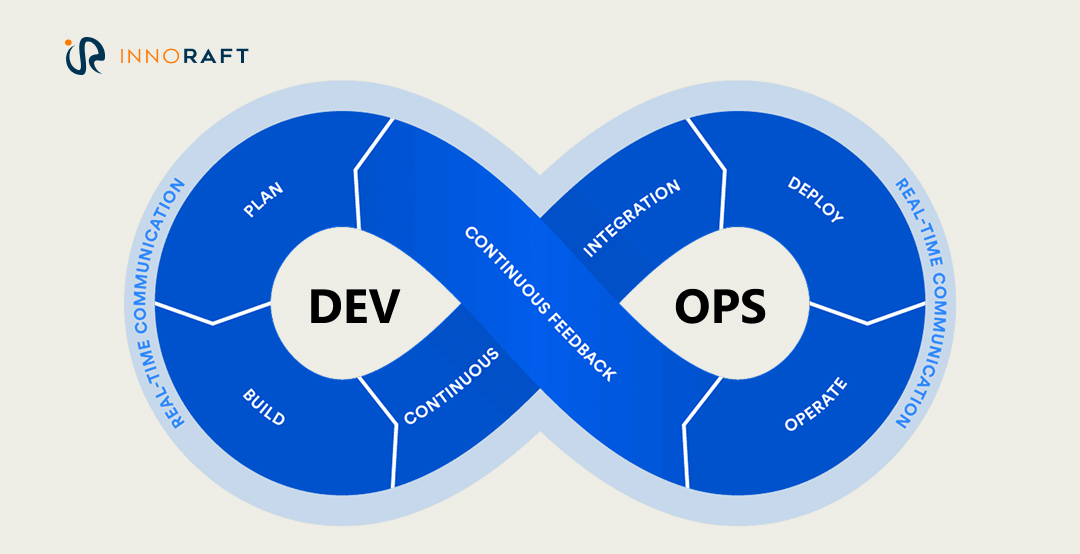
DevOps bridges this gap. It emphasizes a culture where development and operations share responsibility for the entire software lifecycle, from design to production support, creating the foundation for DevOps for accelerated time-to-market. It relies heavily on automation to handle repetitive tasks like testing, infrastructure provisioning, and deployment.
In the context of Digital Evolution, when you hire DevOps developers, you ensure that the software your Agile team builds can be delivered to customers reliably and rapidly. It creates a continuous pipeline of delivery that removes bottlenecks and reduces the risk of human error during releases. It transforms IT from a bottleneck into a business enabler.
How Do Agile and DevOps Work Together?
Agile and DevOps are complementary forces that form a continuous cycle of value delivery, working together through effective Agile DevOps implementation strategies. You can think of them as the brain and the nervous system of your digital body.
Agile software development focuses on the "what" and the "why." It organizes the work, manages the backlog of features, and ensures the team is solving the correct user problems. It dictates the direction of the product based on market needs.
The business benefits of DevOps focuses on the "how" and the "where." It provides the infrastructure, automation, and tooling required to take the code produced by Agile teams and get it into the hands of users without downtime or defects.
When you combine them, you eliminate the friction between having an idea and executing it. Agile creates the potential for value, and DevOps realizes that value, allowing teams to stay aligned with customer-centric digital evolution. For Digital Evolution to succeed, you cannot have one without the other. Agile without DevOps leads to a backlog of unreleased features (inventory waste). DevOps without Agile leads to the rapid deployment of products that nobody wants (production waste).
The Synergy: Key Ways Agile and DevOps Facilitate Digital Evolution
Now that we know Agile and DevOps can be complementary to one another, we can take a detailed look at exactly how they can deliver value together for your digital evolution roadmap, especially when aligned with Agile and DevOps for digital transformation.
Fostering a Culture of Continuous Improvement
The biggest barrier to Digital Evolution is often cultural resistance, specifically the presence of operational silos. Agile and DevOps dismantle these silos by radically changing how teams communicate, collaborate, and share incentives.
Agile breaks down the walls between the business stakeholders and the development team. In traditional "Waterfall" models, business leaders set requirements and checked back in months later. In an Agile environment, business stakeholders (often represented by a Product Owner) are involved daily. They prioritize the backlog and review progress at the end of every sprint, reinforcing a continuous improvement culture in organizations. This ensures the technical team understands the business goals and the business team understands technical constraints.
DevOps breaks down the walls between development and operations. By using shared tools and adhering to Site Reliability Engineering (SRE) principles, developers learn to write code that is operationally sound, and operations teams learn to support agile velocity through code. They share the same goals: availability, latency, performance, and efficiency.
The impact on Digital Evolution is profound. When business, development, and operations work as a single cross-functional unit, the organization develops "organizational agility." You create a culture where feedback is welcomed, failure is viewed as a learning opportunity, and improvement is continuous, exactly the environment where digital evolution frameworks can thrive.
Accelerating Time-to-Market
The primary metric for Digital Evolution is often speed, specifically "Lead Time for Value." How quickly can you go from a concept on a whiteboard to a feature generating revenue? Agile and DevOps achieve this through the mechanism of Continuous Integration and Continuous Delivery (CI/CD).
Agile facilitates speed by reducing the scope of work (batch size). By focusing on Minimum Viable Products (MVPs) and small user stories, the team constantly has a deployable unit of work ready, reinforcing the foundation for continuous delivery in digital evolution. There is no waiting for a massive "Version 2.0" release that takes a year to build.
DevOps facilitates speed by automating the path to production. In a manual environment, deploying code might involve validating servers, copying files, and manual testing; a process that can take days. With a DevOps CI/CD pipeline, this process happens automatically every time a developer commits code.
When you combine Agile's small batch sizes with DevOps' automated pipelines, you achieve a state of continuous flow. You can release updates at a rapid pace, creating exactly the kind of DevOps for accelerated time-to-market advantage that helps you outmaneuver competitors. While they are still planning their release, you have already launched, learned, and iterated.
How Do They Enhance Reliability and Resilience?
A common misconception among traditional leaders is that moving fast breaks things. In a properly structured Agile and DevOps environment, the opposite is true: moving fast improves stability.
Agile promotes stability through a concept called "shift-left testing." This means testing happens early in the development process, not just at the end. Because Agile teams work in small increments, they catch bugs when they are minor and easy to fix, supporting smoother Agile DevOps integration overall.
DevOps promotes stability through Infrastructure as Code (IaC) and Observability. IaC allows you to define your server environments in code. This ensures that your testing environment is identical to your production environment, eliminating the notorious "it works on my machine" issue. Furthermore, DevOps moves beyond simple monitoring (is the server up?) to Observability (why is the system behaving this way?).
This combination allows for "self-healing" systems. If a bad update does get through, automated rollback capabilities can revert to the previous stable version in seconds. For Digital Evolution, this reliability is crucial, especially as customer-centric digital evolution demands always-on, seamless experiences. Customers expect digital services to be available 24/7. By combining Agile's proactive quality assurance with DevOps' robust infrastructure, you ensure that your evolution does not come at the cost of your reputation.
How Do They Drive Customer-Centricity?
Digital Evolution is ultimately about serving the customer better. Agile and DevOps enable a level of customer-centricity that is impossible with traditional methods by closing the gap between the developer and the user.
Agile places the user at the center of the development process, ensuring every decision aligns with a truly customer-centric digital evolution. User stories are written from the perspective of the customer ("As a user, I want to..."). By deploying MVPs, the team solicits feedback on the core value proposition before investing heavily in bells and whistles.
DevOps closes the loop by getting that MVP to the user instantly and enabling "Feature Flags." Feature flags allow you to separate deployment (putting code on the server) from release (showing the feature to the user). You can release a new feature to 1% of your users to test its impact.
This allows you to make data-driven decisions. If the data shows that users are ignoring a new feature, the Agile team can remove it or pivot immediately in the next sprint. This responsiveness, strengthened by effective Agile DevOps implementation strategies, signals to your customers that you are listening. It builds loyalty and ensures your digital strategy evolves in alignment with actual market demand, rather than internal guesswork.
How Can You Start Implementing This?
Implementing Agile and DevOps to drive Digital Evolution can feel overwhelming. It requires changes to people, processes, and technology, which is why adopting Agile and DevOps for digital transformation works best when approached pragmatically using the "Strangler Fig" pattern, gradually replacing the old with the new.
Start Small with a Pilot
Do not attempt to change your entire organization overnight. Identify a single project or a specific product line to serve as a pilot. Choose a "greenfield" application or a distinct module of a legacy system as a starting point for practical Agile DevOps implementation strategies. Empower a cross-functional team with the autonomy to adopt Scrum or Kanban practices. Pair them with operations engineers to build a basic CI/CD pipeline. Use the success of this pilot to demonstrate value to the rest of the organization.
Prioritize Toolchain Automation
Manual processes are the enemy of speed. You need a unified toolchain that reduces friction, especially when establishing DevOps automation best practices across your delivery pipeline. Ensure you have a robust version control system like Git. Implement a Continuous Integration server (like Jenkins, GitLab CI, or GitHub Actions) to automate testing. Use containerization tools like Docker and orchestration platforms like Kubernetes to ensure consistency across environments. The goal is to remove human intervention from the deployment process wherever possible.
Track the Right Metrics (DORA)
You cannot improve what you do not measure. To gauge the success of your Digital Evolution, look to the DORA (DevOps Research and Assessment) metrics—an essential part of fostering a continuous improvement culture in organizations, which are the industry standard for high-performing teams:
- Deployment Frequency: How often you release to production. (Target: On-demand).
- Lead Time for Changes: The time it takes for code to go from commit to production. (Target: Less than one hour).
- Change Failure Rate: The percentage of deployments that cause a failure in production. (Target: 0-15%).
- Mean Time to Restore (MTTR): How long it takes to recover from a failure. (Target: Less than one hour).
Conclusion: The Future of Digital Business
Agile and DevOps are more than just IT buzzwords or trends. They are the strategic pillars of a modern, adaptable business. Agile ensures you are solving the right problems by keeping you tethered to customer value. DevOps ensures you can deliver those solutions rapidly and reliably by automating the heavy lifting. Together, they enable Digital Evolution through effective Agile DevOps integration, fostering a culture of collaboration, accelerating time-to-market, and keeping the customer at the center of every decision.
The market will not wait for you to catch up. This is why you must assess your current processes, identify the silos that are slowing you down and start investing in the cultural and technical shifts required to become a truly digital organization.
Key Takeaways
- Speed is Survival: Digital Evolution is a necessity for maintaining market relevance; slow delivery equals lost market share.
- Agile Defines Value: Agile methodologies use empirical data and iterative loops to ensure you build products that customers actually need.
- DevOps Delivers Value: DevOps automates the delivery pipeline to ensure software is released rapidly, reliably, and securely.
- Silos Must Go: Success requires breaking down barriers between business, development, and operations teams to create cross-functional units.
- Measure with DORA: Use Deployment Frequency, Lead Time, Change Failure Rate, and MTTR to scientifically measure your evolution.
Want to leverage the combined power of Agile and DevOps for the digital evolution success of your business? Contact us to get started!
FAQ
Frequently Asked Questions
Didn’t find what you were looking for here?